
What are the pros of working with an automated palletiser?
An automated palletiser offers significant advantages for businesses looking to enhance their operational efficiency and streamline logistics. At Elsto Smart Solutions, we consistently observe that integrating an automated palletiser into your production line leads to substantial improvements in speed, accuracy, and overall safety. This technology automates the process of stacking products onto pallets, a task traditionally performed manually, thereby transforming warehouse and production operations.
Automated palletising is an essential solution for modern manufacturing and distribution, addressing the challenges of high-volume production and labour shortages. It ensures consistent product handling, reduces the risk of damage, and optimises pallet configurations for storage and transport. Our experience shows that companies adopting these systems quickly realise a strong return on investment through reduced operational costs and increased output.
What kind of information do you find in this article:
The core benefits of an automated palletiser for your operations
Implementing an automated palletiser brings a multitude of benefits, directly impacting your production line’s efficiency and your company’s bottom line. These systems are designed to perform repetitive tasks with precision and speed far exceeding human capabilities, making them indispensable in today’s competitive landscape. At Elsto Smart Solutions, we have seen firsthand how these systems revolutionise operations for our clients, from small businesses to large enterprises.
Increased efficiency and productivity with automated palletising
One of the most compelling advantages of an automated palletiser is the dramatic increase in efficiency and productivity it delivers. These machines operate continuously without breaks, fatigue, or the need for supervision, ensuring a steady flow of products. Manual palletising is inherently slower and prone to inconsistencies, whereas an automated system maintains a consistent pace and perfect stack quality. This directly translates into higher throughput and faster order fulfillment.
Enhanced workplace safety and reduced injuries
Safety is a paramount concern in any industrial environment, and manual palletising often involves heavy lifting and repetitive motions that can lead to significant injuries. An automated palletiser completely removes human operators from these hazardous tasks, drastically improving workplace safety. This not only protects your employees but also reduces the costs associated with workplace accidents, such as medical expenses, lost workdays, and insurance premiums. Our clients at Elsto Smart Solutions often highlight improved safety records as a primary benefit after adopting our solutions.
Significant cost savings and improved ROI
Investing in an automated palletiser represents a strategic move towards long-term cost reduction and improved return on investment (ROI). While the initial outlay can be substantial, the savings quickly accumulate through various channels. We’ve observed that businesses partnering with Elsto Smart Solutions often achieve rapid payback periods due to these efficiencies.
Who is an automated palletiser for?
An automated palletiser is a versatile solution that benefits a wide range of industries and business sizes, particularly those dealing with high volumes, repetitive tasks, or heavy products. At Elsto Smart Solutions, we tailor solutions to meet the specific needs of diverse clients.
Why choose Elsto Smart Solutions for your palletising needs?
At Elsto Smart Solutions, we pride ourselves on delivering cutting-edge automated palletising solutions that are robust, efficient, and tailored to your specific operational requirements. Our extensive experience in industrial automation allows us to design, integrate, and support systems that not only meet but exceed your expectations. We understand that every business has unique challenges, and our approach is always to provide a solution that truly solves your pain points and drives tangible results.
We don’t just sell equipment; we partner with you to understand your processes, identify areas for improvement, and implement a system that seamlessly integrates with your existing infrastructure. Our commitment to innovation and customer satisfaction ensures that you receive a solution that is future-proof and provides a strong competitive edge. Our team of experts is dedicated to providing comprehensive support, from initial consultation and design to installation, training, and ongoing maintenance.
Addressing common concerns about automated palletising
While the benefits of an automated palletiser are clear, some businesses may have questions or concerns about implementation and operational aspects. At Elsto Smart Solutions, we believe in transparency and addressing these points head-on.
What is the lifespan of a palletiser?
The lifespan of an automated palletiser typically ranges from 15 to 20 years, and often even longer, with proper maintenance and regular servicing. Our robust systems at Elsto Smart Solutions are built with high-quality components designed for industrial environments, ensuring durability and reliability. Factors influencing longevity include the quality of manufacturing, the intensity of use, and adherence to recommended maintenance schedules. Investing in a quality system and a comprehensive maintenance plan will maximise your palletiser’s operational life.
How does palletising work?
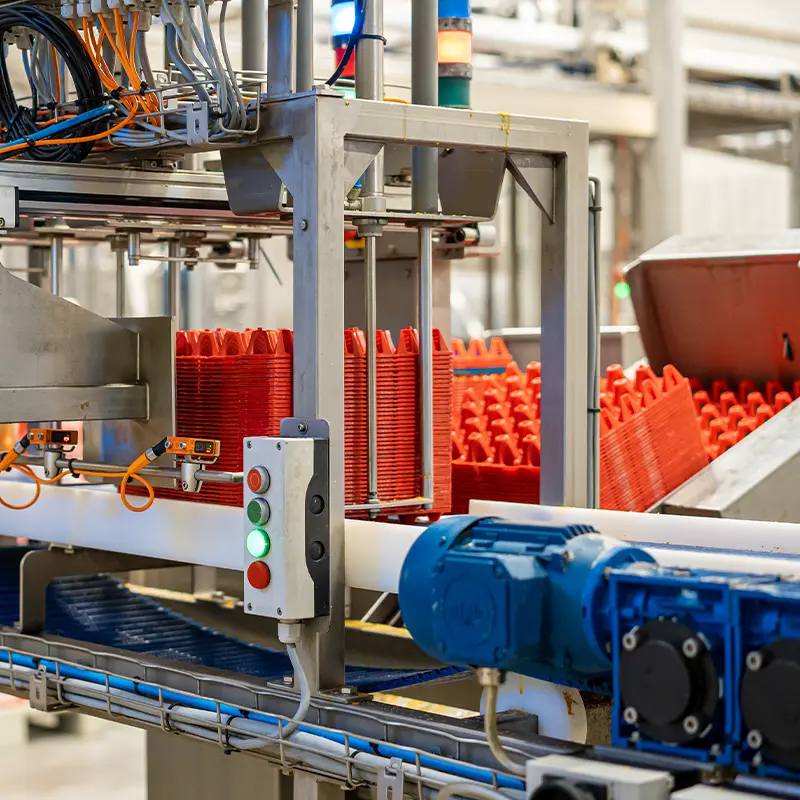
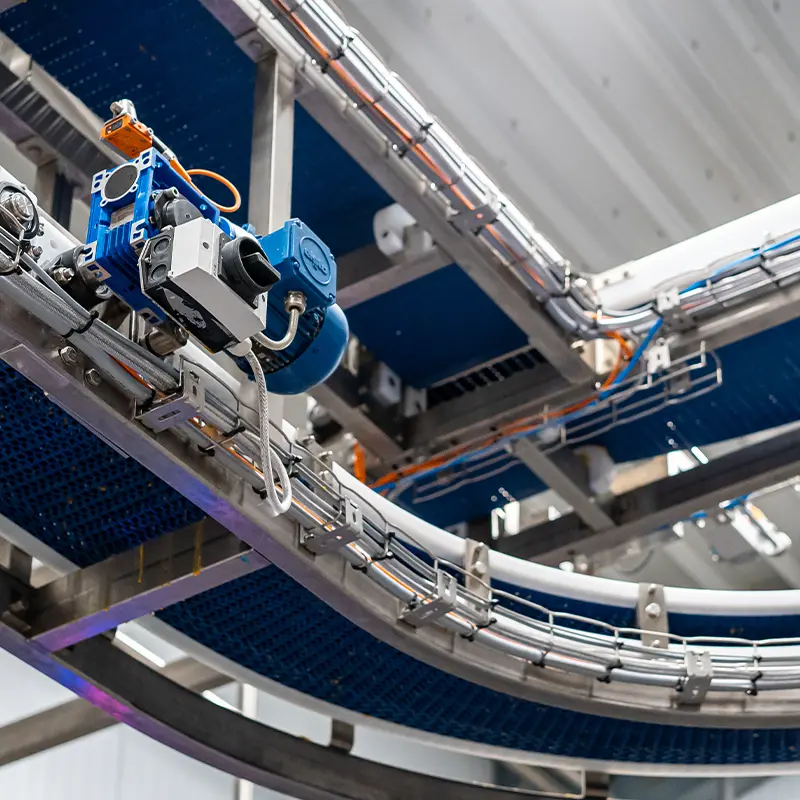
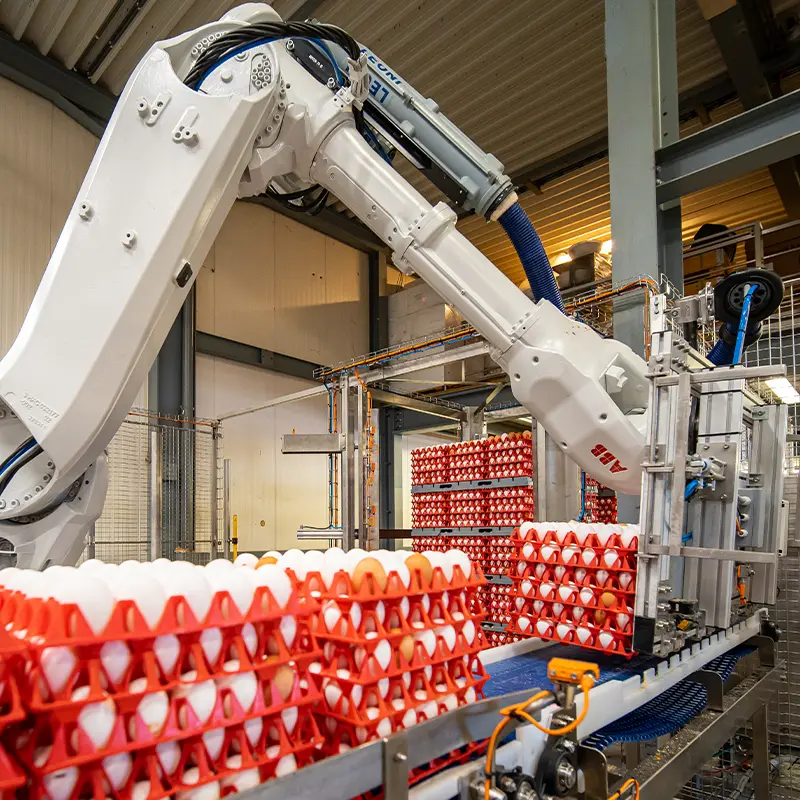
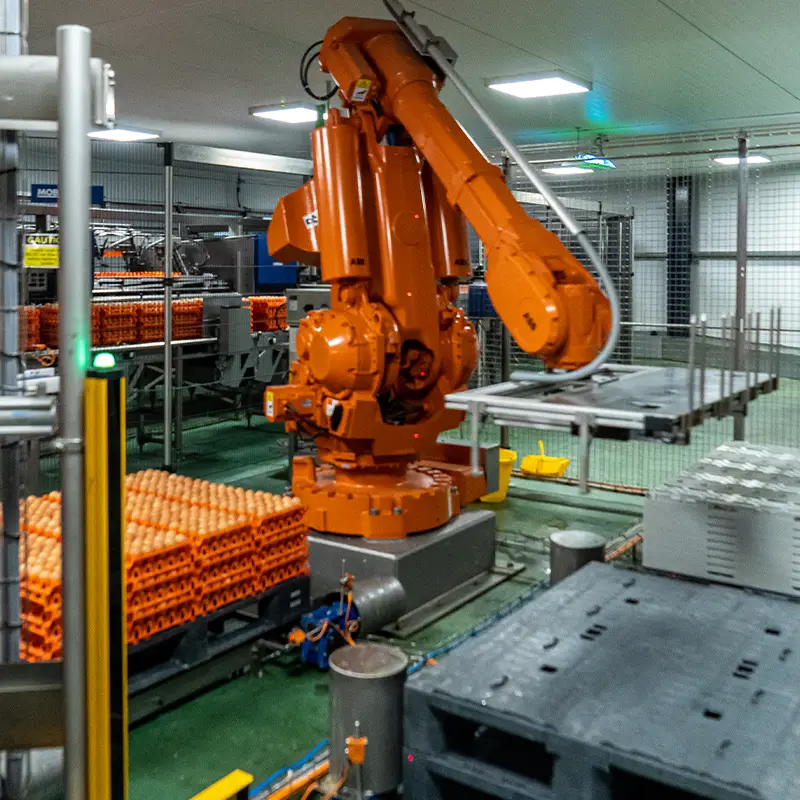
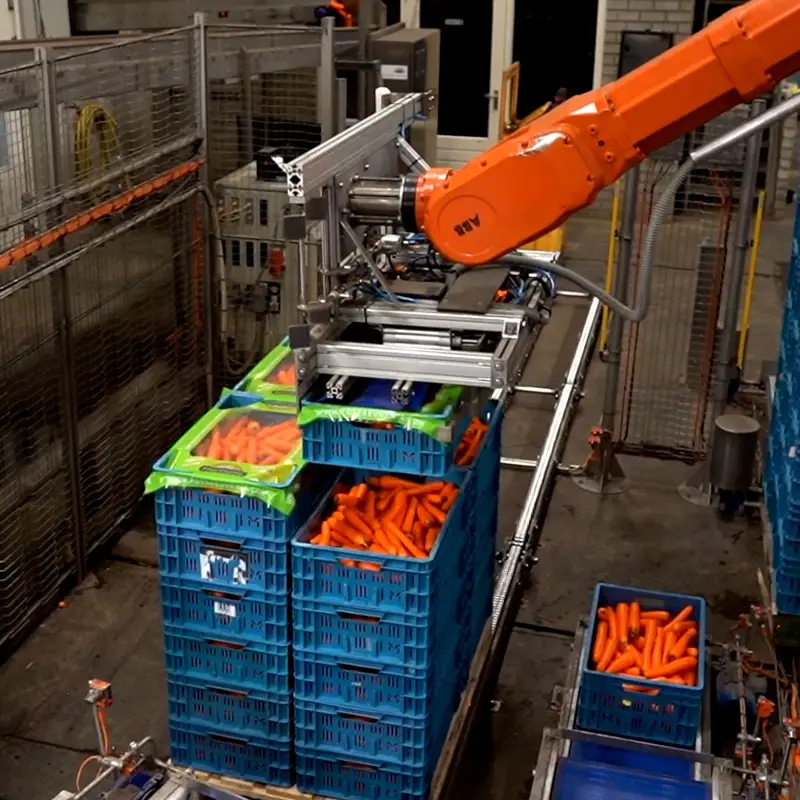
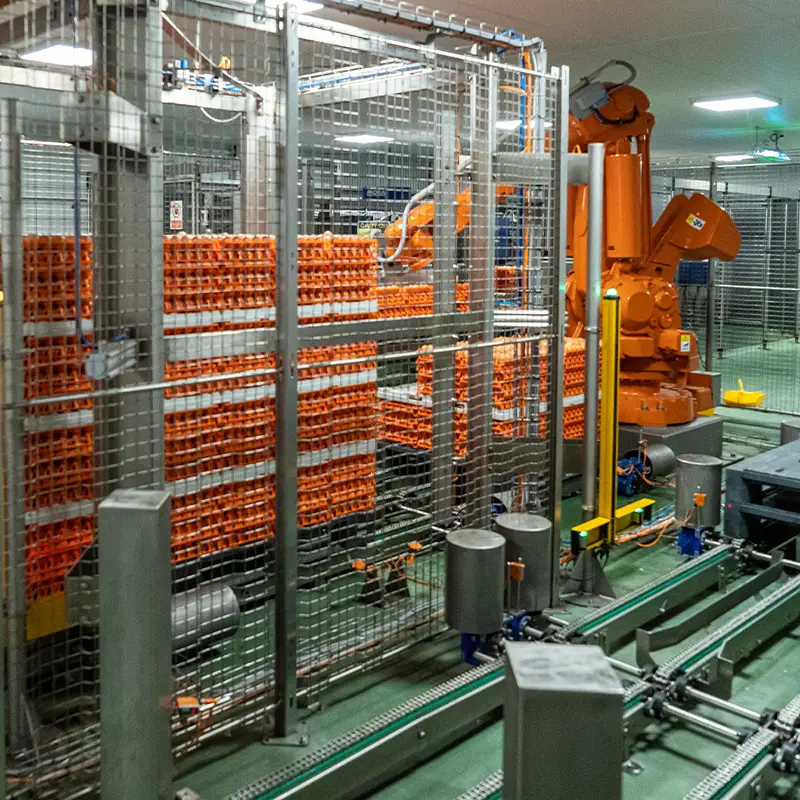
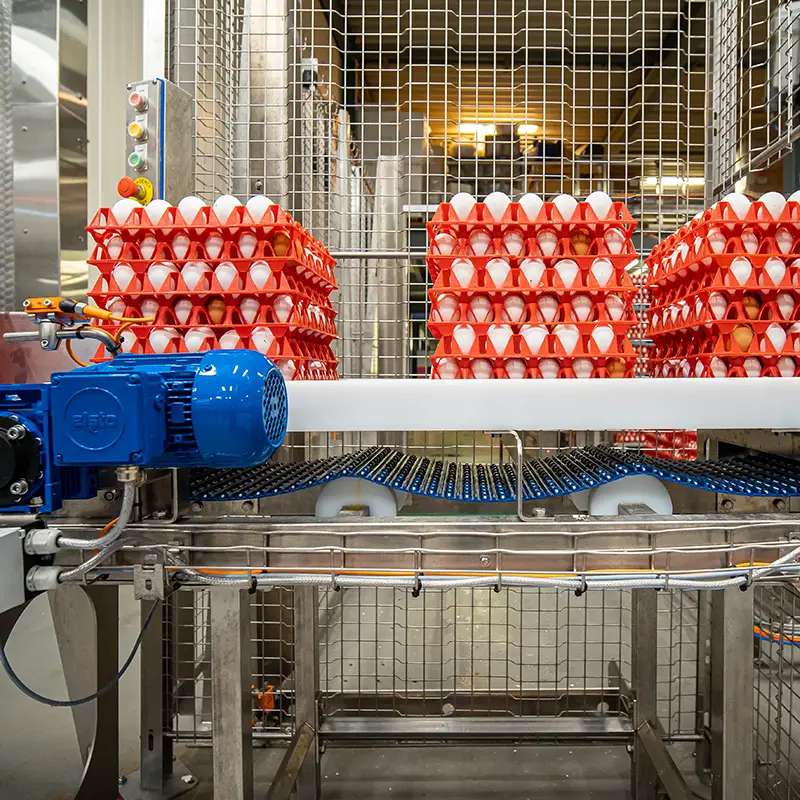
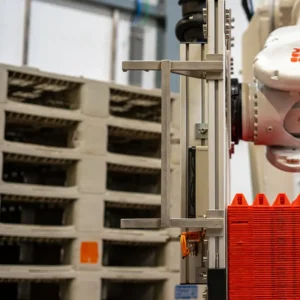
Automated palletising involves a series of coordinated steps to arrange products onto a pallet in a predefined pattern. Products typically arrive at the palletiser via a conveyor system. A robotic arm or other mechanical device then picks up individual products or layers of products. Using pre-programmed software, the system precisely places each product onto the pallet according to an optimised stacking pattern. Once a layer is complete, the process repeats until the pallet reaches its desired height. The full pallet is then often wrapped and moved to a staging area, ready for transport. Elsto Smart Solutions configures these processes to ensure seamless integration into your existing production flow. As an example, look at our transport system for an egg breaking facility.
Integration with existing production lines
One of the key considerations when implementing an automated palletiser is its integration with your current production line. Our team at Elsto Smart Solutions specialises in seamless integration, ensuring minimal disruption to your operations. We conduct thorough assessments of your existing setup, including conveyor systems, product flow, and facility layout, to design a solution that fits perfectly. Our goal is to enhance your overall system, not just add a standalone piece of equipment.
Frequently asked questions about automated palletisers
Here are some common questions we receive regarding automated palletisers and their implementation.
What types of products can an automated palletiser handle?
An automated palletiser is highly versatile and can handle a vast array of products, from bags of granular materials and boxes of consumer goods to crates, trays, and even individual items. The specific gripper or end-of-arm tooling can be customised to suit the shape, size, and weight of almost any product, allowing for flexible application across various industries.
What is the typical ROI for an automated palletiser?
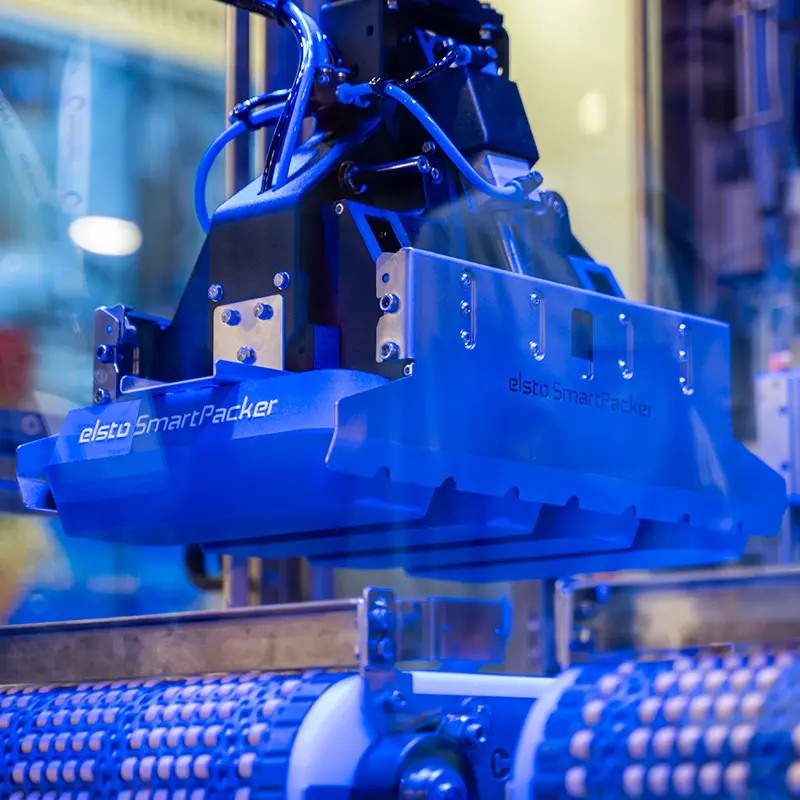
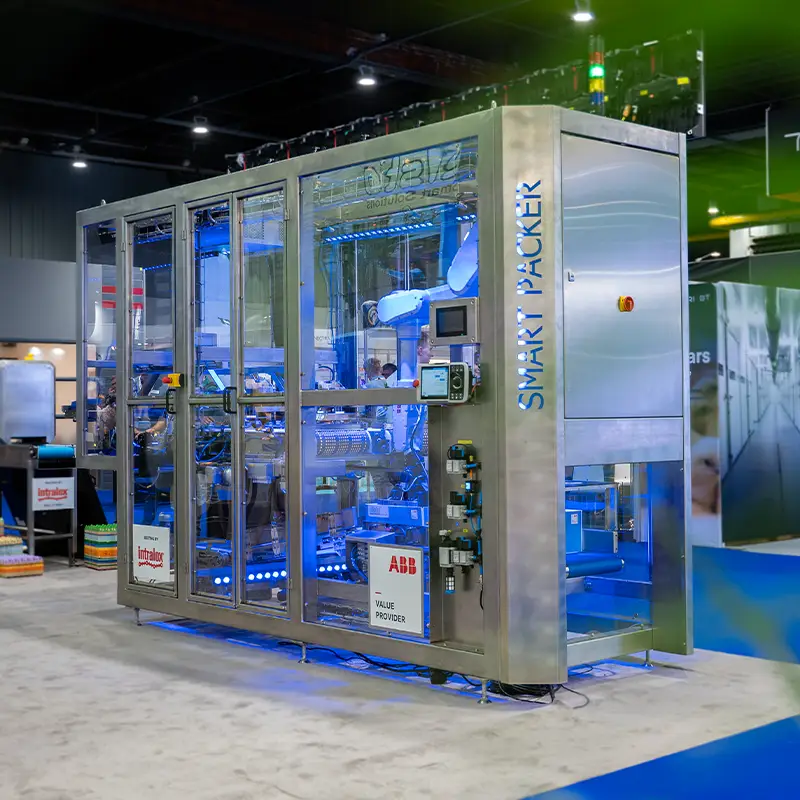
The typical return on investment (ROI) for an automated palletiser can vary, but many businesses see a payback period within 1 to 3 years due to significant savings in labour costs, reduced product damage, and increased throughput. Factors like production volume, labour costs, and the complexity of the system all influence the exact ROI, which Elsto Smart Solutions can help calculate for your specific situation. For more examples, see how our Smartpacker delivers compact, fast, and versatile egg packing solutions.
How much space does an automated palletiser require?
The space required for an automated palletiser depends on its type (e.g., conventional vs. robotic) and the specific application, but they generally require less space than a manual palletising area. Robotic palletisers, in particular, offer a compact footprint and can be integrated into tight spaces, making them suitable for facilities with limited floor space.
Can an automated palletiser handle multiple product lines?
Yes, many advanced automated palletisers are designed to be flexible and can handle multiple product lines simultaneously or switch between different product types with minimal changeover time. This is achieved through programmable software and interchangeable tooling, allowing for efficient production of diverse products on a single system.
What kind of maintenance is required for an automated palletiser?
Regular maintenance for an automated palletiser typically includes routine inspections, lubrication of moving parts, checking for wear and tear on components, and software updates. Preventive maintenance is crucial for ensuring longevity and consistent performance, and Elsto Smart Solutions offers comprehensive service plans to keep your system running optimally.
Elsto Smart Solution’s conclusion
The advantages of implementing an automated palletiser are clear and compelling for any business striving for operational excellence. From significantly boosting efficiency and productivity to enhancing workplace safety and delivering substantial cost savings, these systems are a cornerstone of modern industrial automation. At Elsto Smart Solutions, we are dedicated to providing bespoke automated palletising solutions that empower your business to achieve its full potential. By choosing us, you gain a partner committed to innovation, reliability, and superior customer support. We invite you to explore how an automated palletiser can transform your operations and contribute to your long-term success. Contact us today to discuss your specific needs and discover the ideal automation solution for your business.
Related posts