
Why manual depalletizing is becoming increasingly harder
Manual depalletizing, the process of removing products from a pallet, is a traditional method still used in many warehouses and production environments. However, in practice, we are observing that this approach is becoming less profitable, leading to rising costs and operational challenges. This trend is forcing companies to critically evaluate their logistics processes and consider how automation can contribute to more efficient and cost-effective operations.
What kind of information do you find in this article:
What exactly is depalletizing and why is it important?
Depalletizing is the process of unstacking goods, packaging, or products from pallets, often for further processing, storage, or distribution. This is a crucial step in a company’s internal logistics, as it forms the link between receiving goods and subsequent steps in the production or distribution chain. Efficient depalletizing ensures a smooth flow of materials, minimizes downtime, and contributes to higher productivity. At Elsto Smart Solutions, we believe that a well-optimized depalletizing process is essential for healthy business operations.
The role of depalletizing in logistics chains
Within the logistics chain, depalletizing is often the first physical action that occurs after unloading trucks. It largely determines the speed at which incoming goods can be processed and prepared for the next phase. A slow or inefficient depalletizing process can lead to bottlenecks, delays, and higher storage costs, as goods remain on the pallet for longer. Our experience shows that optimization here directly impacts the entire supply chain.
What factors are making manual depalletizing more expensive?
The costs of manual depalletizing are rising due to a combination of macroeconomic trends and operational challenges that companies face daily. These factors put pressure on profit margins and make traditional methods less sustainable. At Elsto Smart Solutions, we accurately analyze these factors to offer our customers the best automated solutions.
Rising labor costs and staff shortages
One of the most significant drivers behind rising costs is the constant increase in labor costs. Minimum wages are rising, and the demand for skilled and unskilled logistics personnel is high, further driving up wages. Additionally, finding enough motivated employees for physically demanding and repetitive work is becoming increasingly difficult. We see that many of our customers struggle to attract and retain staff, which makes reliance on manual labor particularly vulnerable.
Ergonomic risks and absenteeism
Manual depalletizing is physically demanding. Lifting, bending, and reaching can lead to back pain, overuse injuries, and other ailments. This not only results in human suffering but also in higher costs for absenteeism, reintegration, and staff replacement. Companies have a responsibility for the health of their employees, and investing in ergonomic solutions is crucial. Our robotic solutions contribute to a safer working environment, which translates into less absenteeism and higher employee satisfaction.
Inefficiency and variability in processes
Human labor is inherently variable. The speed and accuracy of depalletizing can fluctuate due to fatigue, motivation, or simply human error. This leads to inconsistency in lead times, a higher chance of product damage, and less predictable operational costs. An automated process, on the other hand, offers consistent speed and precision. At Elsto Smart Solutions, we help companies eliminate this variability with robust robotic solutions.
The impact of product diversity on depalletizing costs
The complexity of modern product assortments, with an increasing number of product variants and packaging formats, makes manual depalletizing even more challenging and expensive. Adapting to different shapes, weights, and stabilities of products demands a lot from manual workers.
Different packaging and stacking patterns
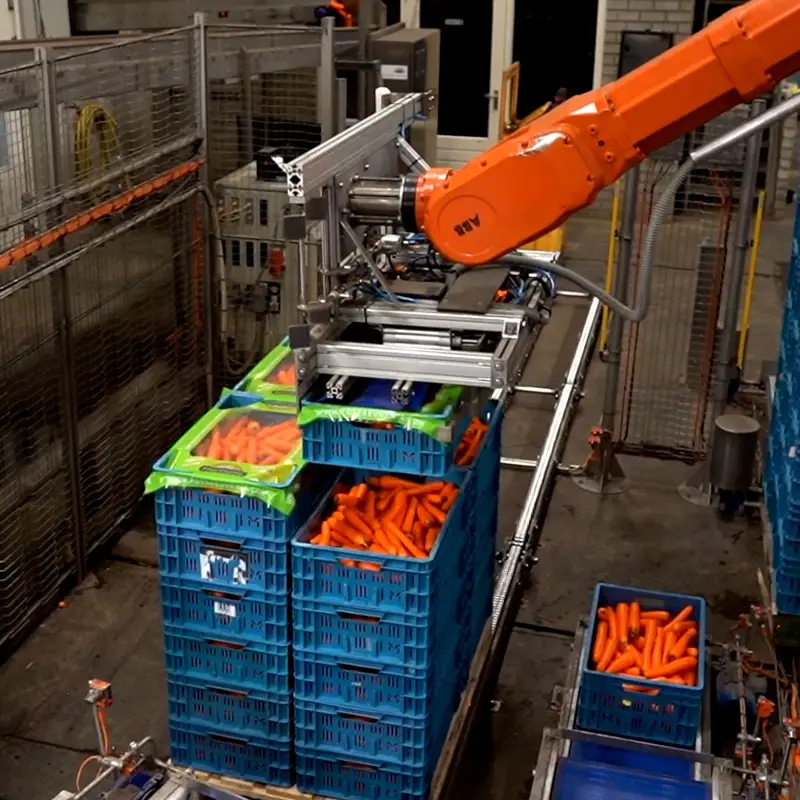
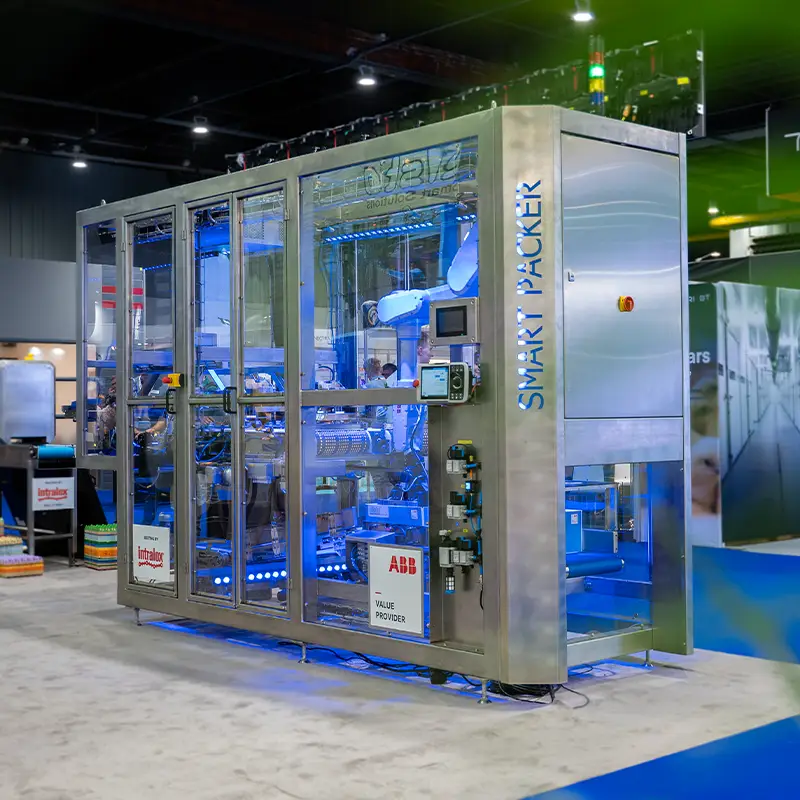
Supermarkets and other retailers increasingly request ‘rainbow pallets’ or mixed pallets, where different products are stacked on a single pallet. This requires depalletizers to constantly switch between different products and lifting techniques, which reduces efficiency and increases the chance of errors. Even for a handling robot for the carrot industry, such as the one we developed, adapting to diverse product formats is an important consideration. These challenges highlight why automation is a strategic choice for many companies.
Product damage and higher waste percentages
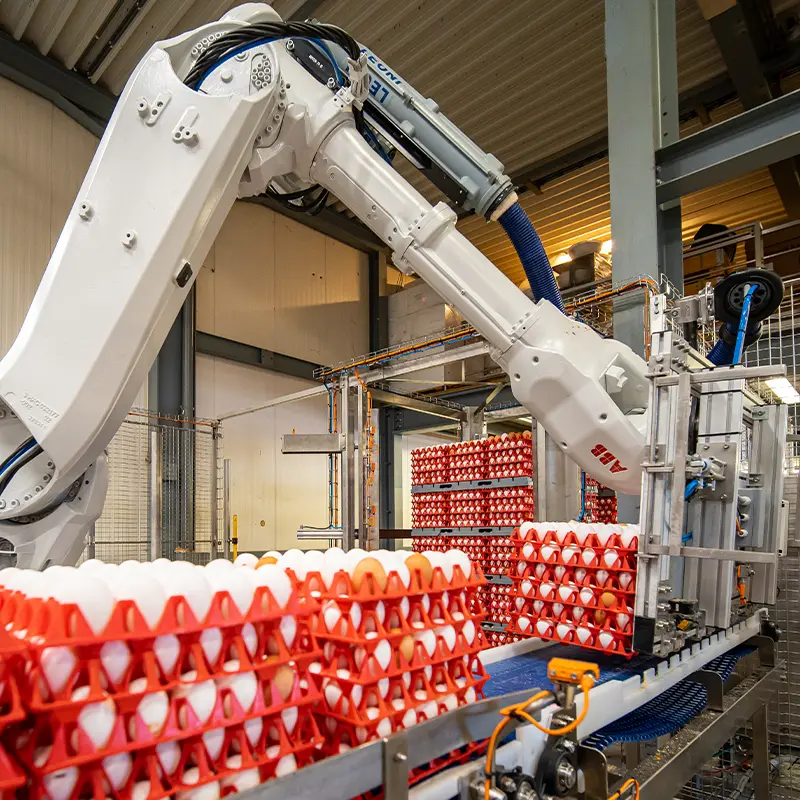
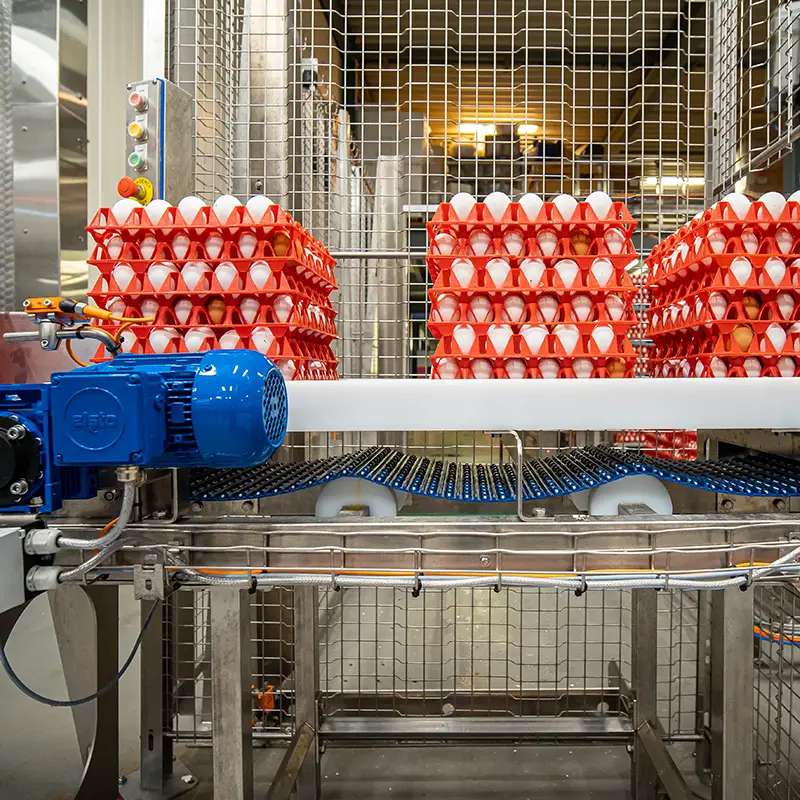
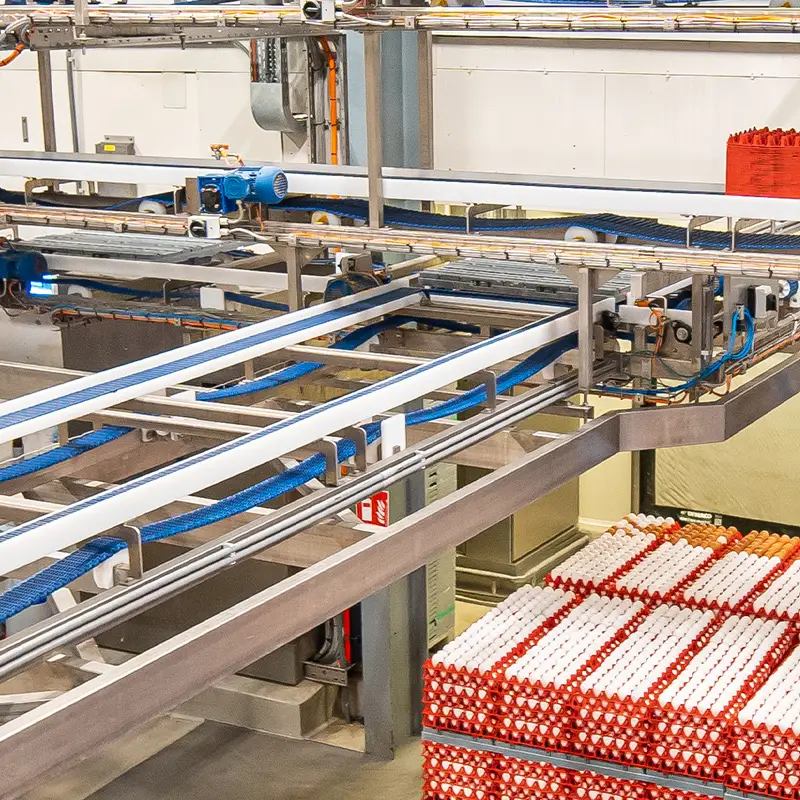
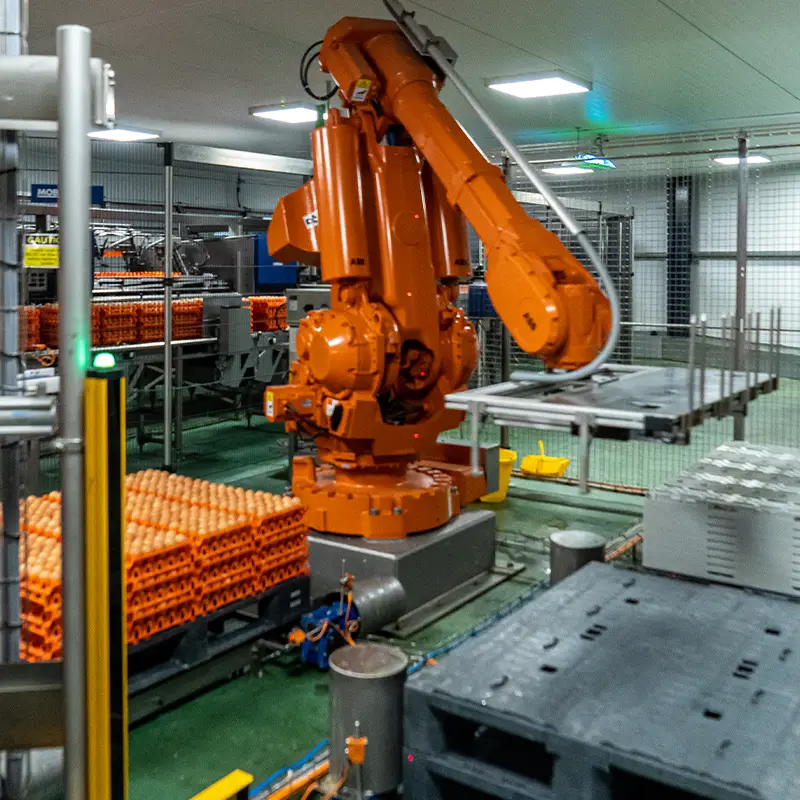
With manual work, the risk of product damage is greater, especially for fragile or awkwardly packaged goods. A damaged product means loss of revenue and can lead to additional waste disposal costs. Robots can handle products with extreme precision and consistent force, significantly reducing the chance of damage. Our robot integration with an egg sorter, for example, demonstrated how crucial precision is for fragile products.
Who benefits from depalletizing automation?
Automation of depalletizing is no longer a luxury but a necessity for many companies that want to remain competitive. It is relevant for a wide range of sectors and business types, especially where physical work is heavy, repetitive, or inefficient.
Elsto Smart Solutions’ solutions are particularly interesting for:
How robotic depalletizing offers the solution
Robotic depalletizing is the effective counterpoint to the ever-increasing costs of manual labor. It offers a range of benefits that directly contribute to higher efficiency, lower costs, and a better working environment. This makes it a strategic investment for the future.
Consistent performance and higher throughput
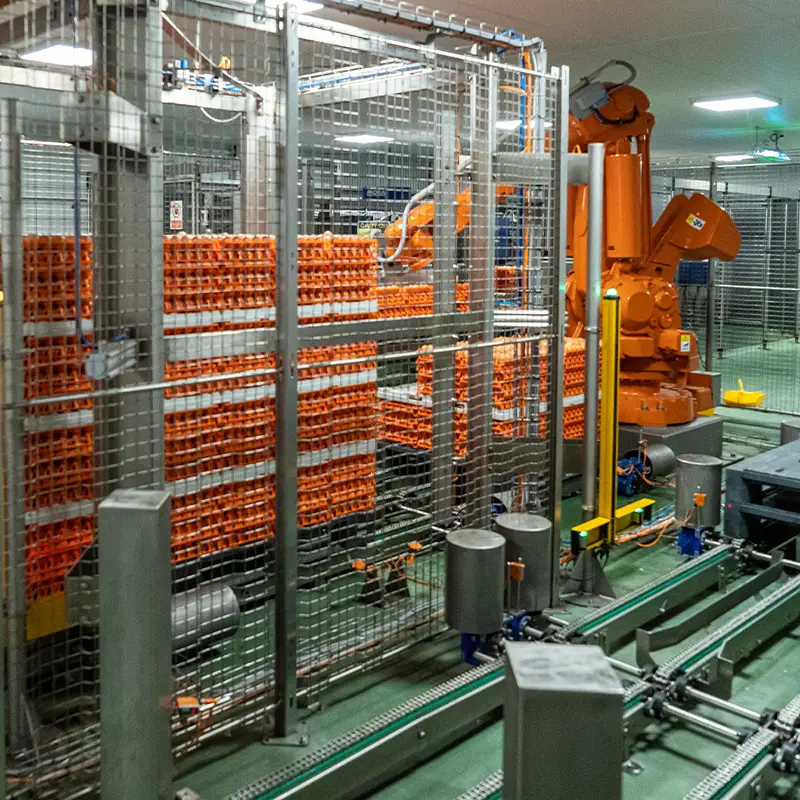
Robots work tirelessly and consistently, 24 hours a day, 7 days a week, without fatigue. This results in a predictable and high throughput of goods, which is crucial for companies with tight production schedules. Our projects, such as the robot integration at a potato peeling company, demonstrate how robots can significantly increase productivity.
Fewer errors and product damage
The precision of robots minimizes the chance of human error and product damage. This saves costs that would otherwise arise from waste, rework, and claims. The investment in a robot quickly pays for itself.
Improved ergonomics and working conditions
By taking over heavy and repetitive lifting, robots significantly improve ergonomics on the shop floor. Employees can be deployed for less physically demanding and more valuable tasks, leading to higher satisfaction and less absenteeism. At Elsto Smart Solutions, we consider a safe and pleasant working environment as important as efficiency.
Flexibility in product handling
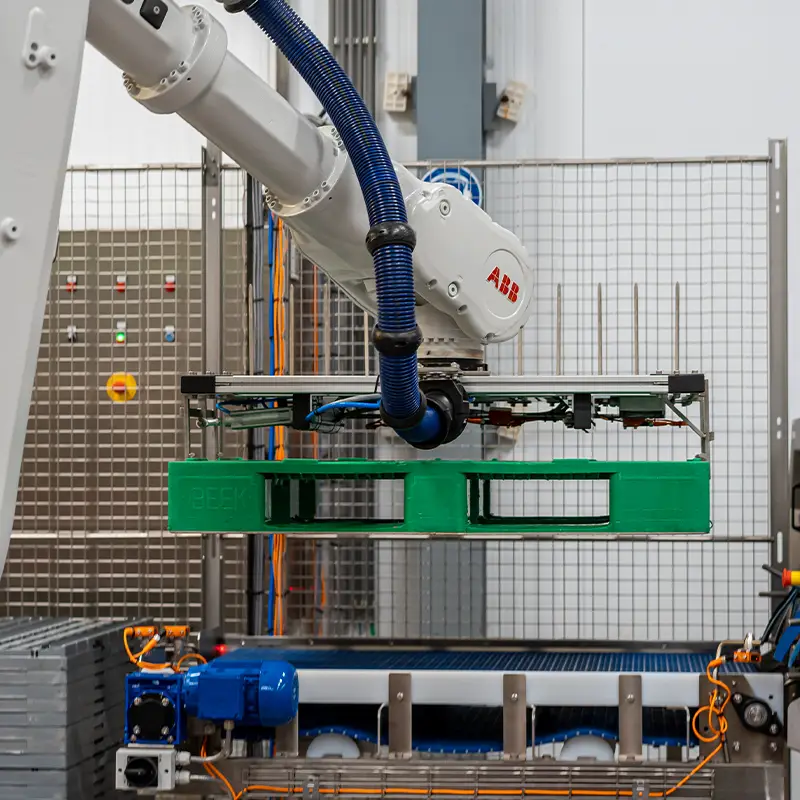
Modern robotic depalletizing systems can be equipped with advanced grippers and vision systems capable of handling diverse products and packaging types, even on mixed pallets. This makes them extremely flexible for companies with a wide assortment. The flexibility of our solutions is a key advantage for our customers.
Elsto Smart Solutions’ approach to robotic depalletizing
At Elsto Smart Solutions, we strongly believe in customization and innovation. We design and implement robotic depalletizing solutions that perfectly match the specific needs and challenges of your company. Our experienced engineers work closely with you to realize a solution that is not only efficient but also future-proof.
Our process includes:
Our handling robot for the carrot industry is a perfect example of how we transform complex challenges into efficient, automated solutions. We are proud of the projects we have completed and the value we deliver to our customers.
A future-proof investment
Investing in robotic depalletizing is investing in the future of your company. It allows you to respond more flexibly to market changes, increase productivity, and strengthen your competitive position. Elsto Smart Solutions is happy to help you with this transition. We believe that automation is the key to resilient and successful business operations.
Embrace Automation with Elsto Smart Solutions
The trend is clear: manual depalletizing is becoming increasingly expensive and less sustainable, driven by rising labor costs, staff shortages, and the increasing complexity of product flows. For companies that want to operate efficiently, cost-consciously, and future-oriented, automation is no longer an option but a necessity. Robotic depalletizing offers the solution by ensuring consistency, speed, precision, and an improved working environment.
At Elsto Smart Solutions, we are your partner in this transition. We offer not only advanced robotic solutions but also the expertise and experience to seamlessly integrate them into your business processes. Contact us today to discuss how we can automate your depalletizing process and prepare your company for the future.
Frequently Asked Questions about Depalletizing
In the world of internal logistics, many questions arise about optimizing processes such as depalletizing. Here we answer some common questions that we regularly encounter at Elsto Smart Solutions. Also, check out related news for further insights.
What is automatic palletizing?
Automatic palletizing is the process where robots or automated machines stack products on pallets according to a predefined pattern, ensuring efficiency, speed, and consistency in the logistics chain. This is in contrast to depalletizing, where products are removed from the pallet.
What is the average price of a pallet?
The average price of a pallet varies greatly depending on the type (e.g., Euro pallets, block pallets), the material (wood, plastic, metal), and the condition (new, used). A standard wooden Euro pallet can range from €10 to €25, but this is only an indication and can fluctuate significantly due to market conditions and purchase volumes.
How long does it take to implement a robotic depalletizing system?
The implementation duration of a robotic depalletizing system depends on the complexity of the project, the degree of integration with existing systems, and the availability of the production line. On average, a project from design to operational system can take several weeks to several months, with Elsto Smart Solutions striving for the shortest possible disruption to your operations.
Are robotic depalletizing systems suitable for small businesses?
Yes, robotic depalletizing systems are also suitable for small and medium-sized businesses, especially if they deal with high volumes, repetitive work, or staff shortages. The initial investment can be significant, but the long-term savings in labor costs, absenteeism, and product damage make it a profitable investment. At Elsto Smart Solutions, we offer scalable solutions that fit various business sizes and budgets.
What products can be depalletized with a robot?
Virtually any type of product can be depalletized with a robot, from boxes and bags to bottles and fragile components, thanks to the development of specialized grippers and vision systems that adapt to different shapes and materials. Our experience extends across various sectors and product types, including the potato and egg industries, as seen in our robot integration at a potato peeling company and robot integration at an egg sorter.
Related posts