
Automated egg grading systems: ensuring quality and efficiency
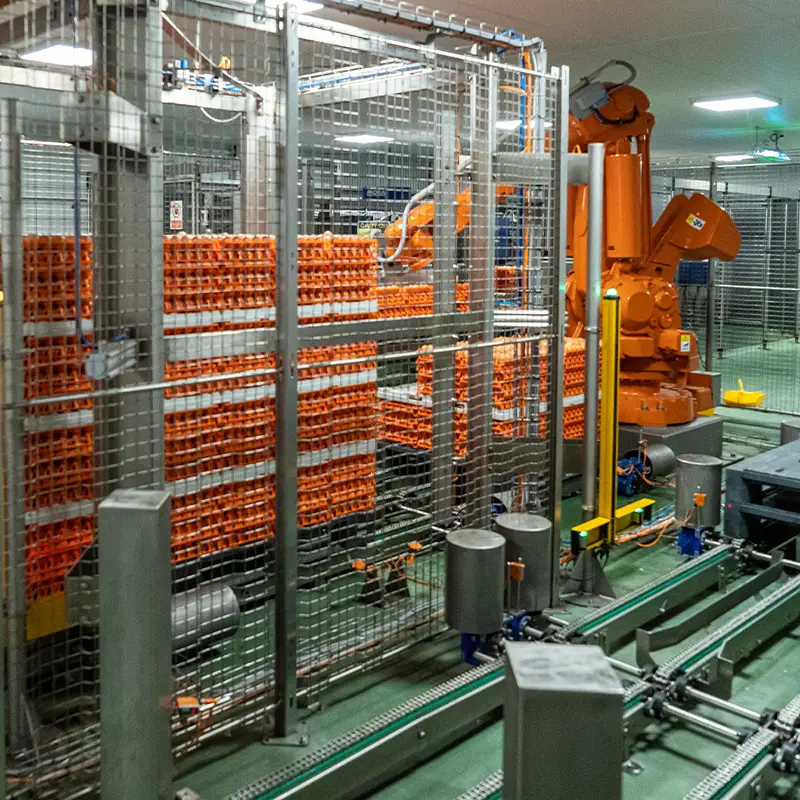
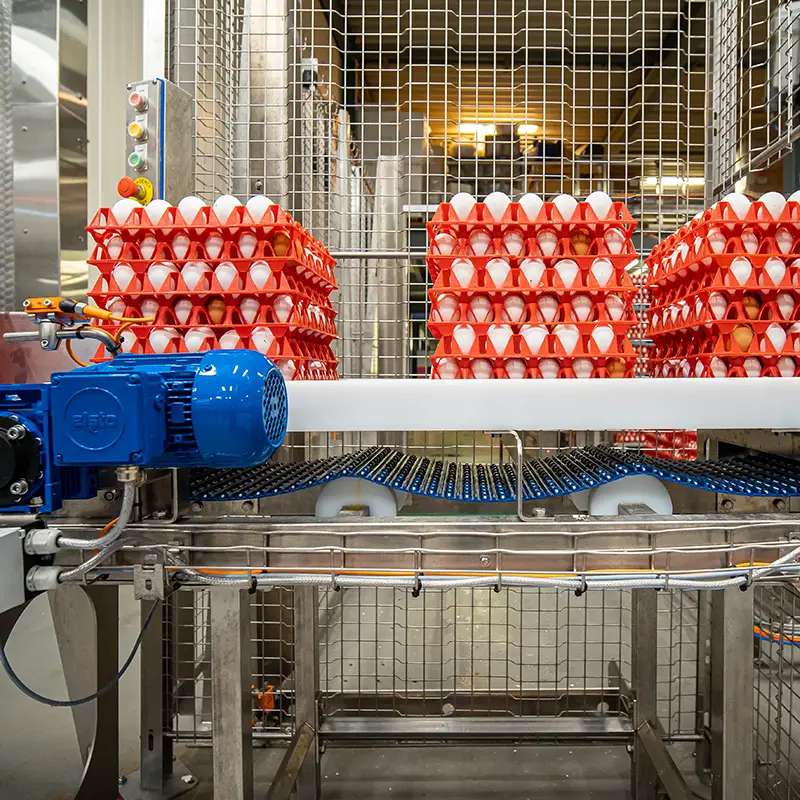
Automated egg grading systems are the backbone of the modern poultry industry, using advanced technology to sort eggs with remarkable speed and accuracy. These systems are crucial for classifying eggs based on weight, size, and quality, ensuring every egg that reaches the consumer meets strict standards. For producers like you, implementing a smart grading solution from Elsto Smart Solutions is the key to optimizing operations, enhancing food safety, and securing a competitive market advantage.
What kind of information do you find in this article:
What is an automated grading system of eggs?
An automated grading system of eggs is a sophisticated machine that sorts eggs based on predefined criteria like weight, size, shell integrity, and internal quality. This process is vital for standardizing products for the market. By automating this task, producers can meet consumer expectations precisely, reduce manual labour, and ensure a consistently high-quality product, which ultimately boosts brand trust and profitability.
The core function of a grading system of eggs is to create uniformity, which benefits everyone in the supply chain. For producers, it means achieving better pricing for premium products and minimizing waste. For consumers, it guarantees that the eggs they buy are reliable in size and quality. Elsto Smart Solutions engineers custom systems that integrate these processes seamlessly into your existing workflow.
The importance of egg grading in the modern poultry industry
Egg grading is a cornerstone of quality assurance and market compliance in today’s poultry industry, going far beyond simple sorting. It directly impacts food safety, consumer confidence, and the economic success of your business. An accurate grading process prevents substandard or unsafe eggs from entering the market, protecting both your brand’s reputation and public health.
Effective grading allows for strategic pricing based on established quality tiers. By sorting eggs into different grades (like AA, A, and B) and sizes (from peewee to jumbo), you can maximize the value of your entire output. This systematic approach ensures that every egg is sold at its appropriate market value, turning consistency into profitability.
Key criteria for grading eggs
Eggs are graded based on several key criteria to ensure they meet regulated quality and consistency standards. These factors, often governed by national bodies, provide a universal benchmark for the industry. Understanding them is essential for producing a marketable and reliable product that consumers can trust.
Weight and size classification
Weight and size are the most common factors in egg grading, directly affecting how eggs are priced and packaged. Automated systems use precision scales to weigh each egg individually, sorting them into categories like jumbo, large, medium, and small. This precise classification ensures uniformity in every carton and helps producers meet specific orders from retailers.
Interior quality assessment
The interior quality of an egg, which includes the firmness of the albumen (egg white) and the condition of the yolk, is a key indicator of freshness. This is typically evaluated through candling, a process where a bright light is shone through the egg. Automated systems use advanced sensors to detect a small air cell, a clear and firm albumen, and the absence of blood or meat spots, all signs of a high-quality egg.
Exterior quality: shell integrity and cleanliness
An egg’s shell is its primary defence against contamination. During grading, the shell is inspected for cracks, cleanliness, and unusual shapes or textures. Automated vision systems are exceptionally skilled at this, detecting hairline cracks invisible to the human eye. Eggs with compromised shells are automatically removed to ensure food safety and extend the shelf life of the final product.
How do automated egg grading systems work?
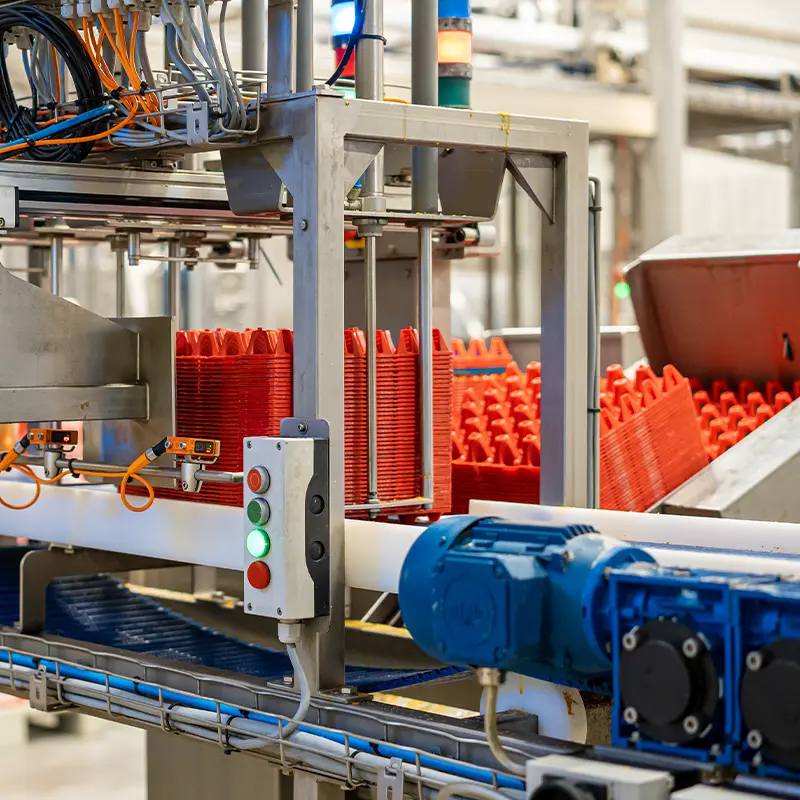
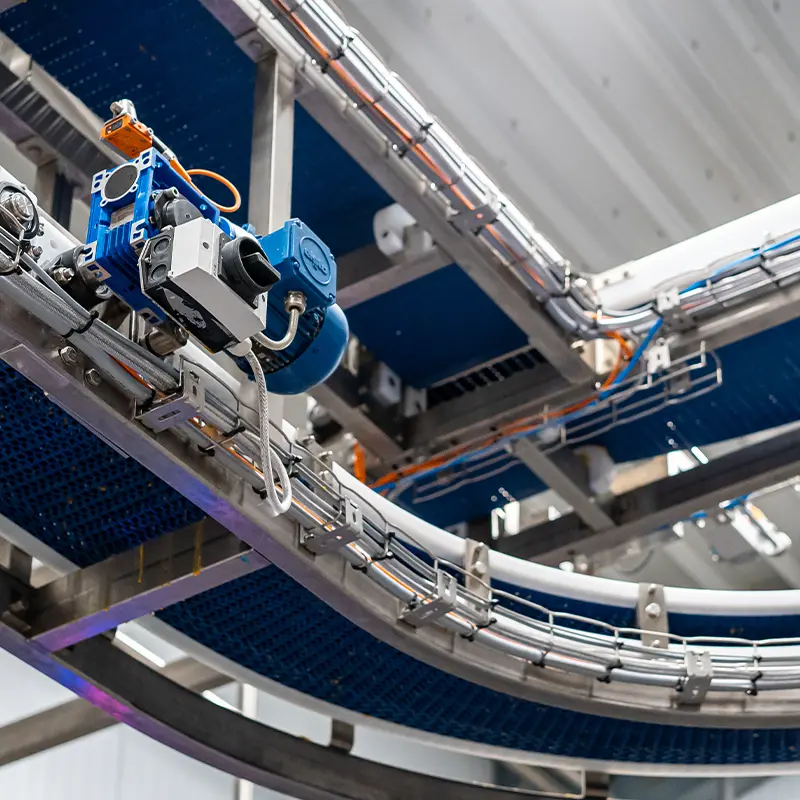
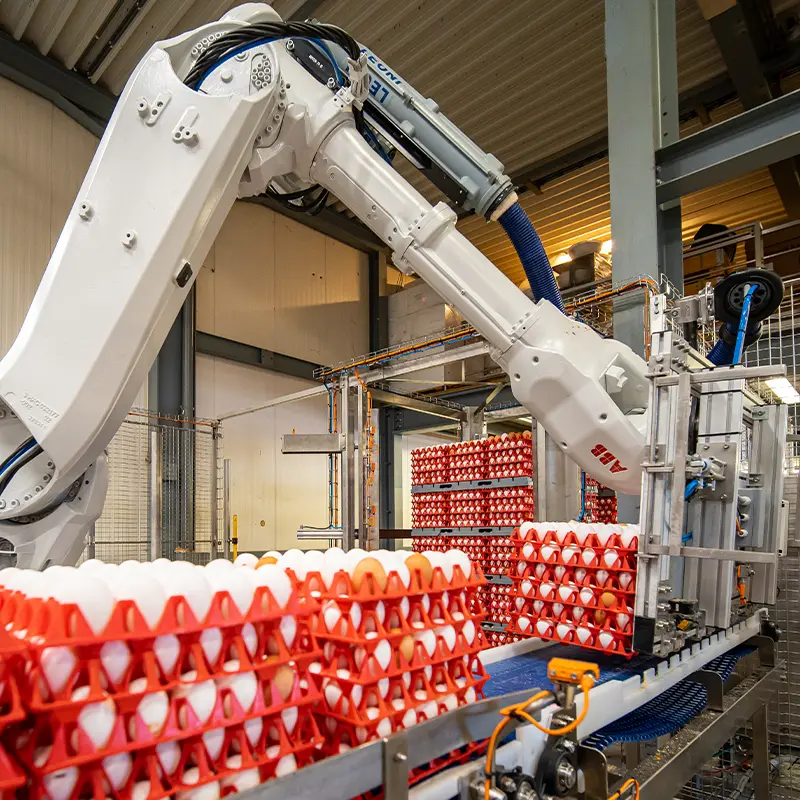
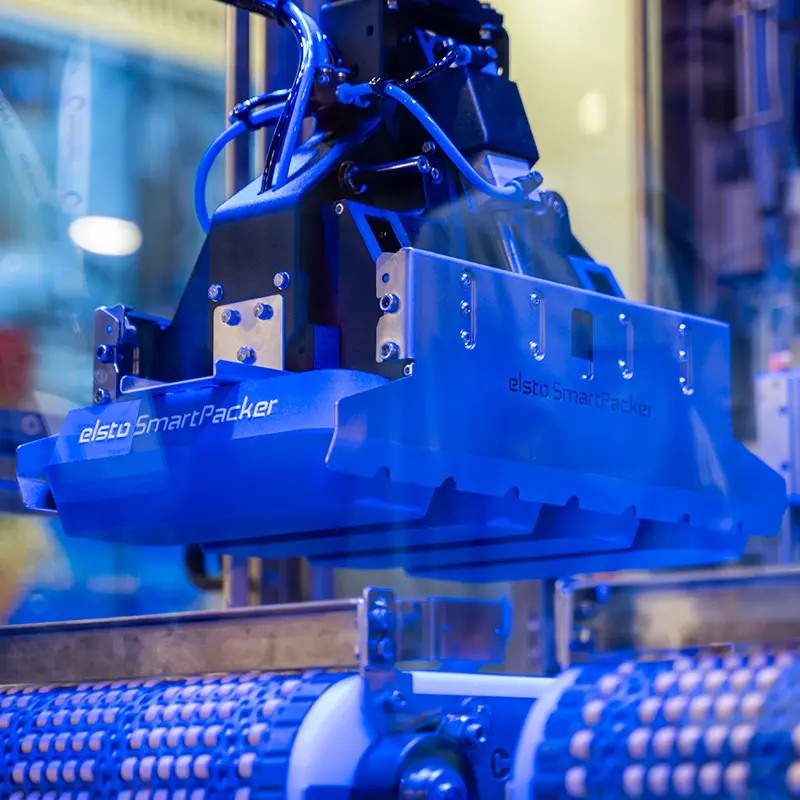
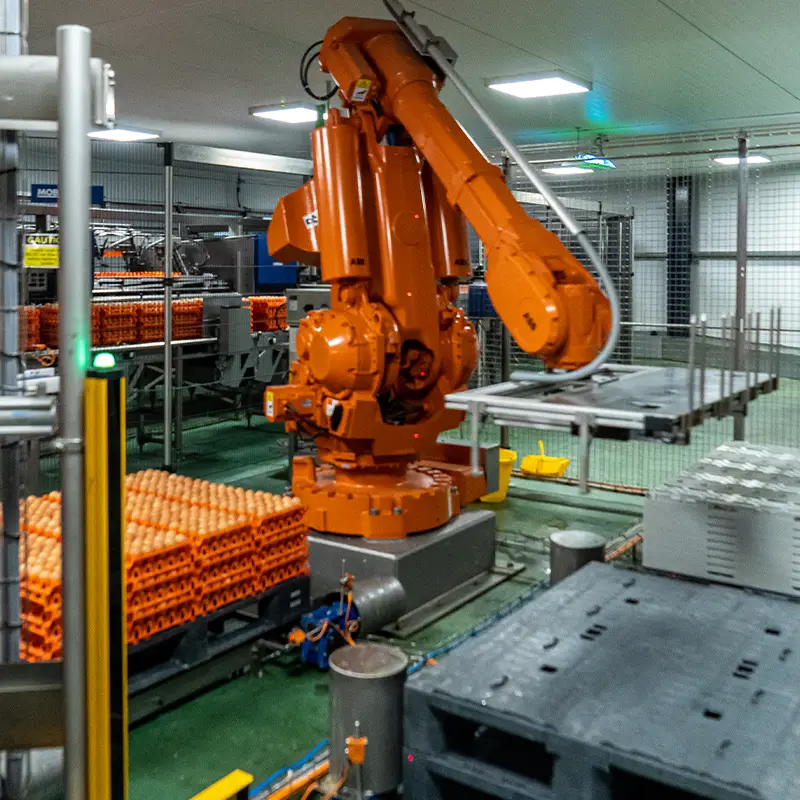
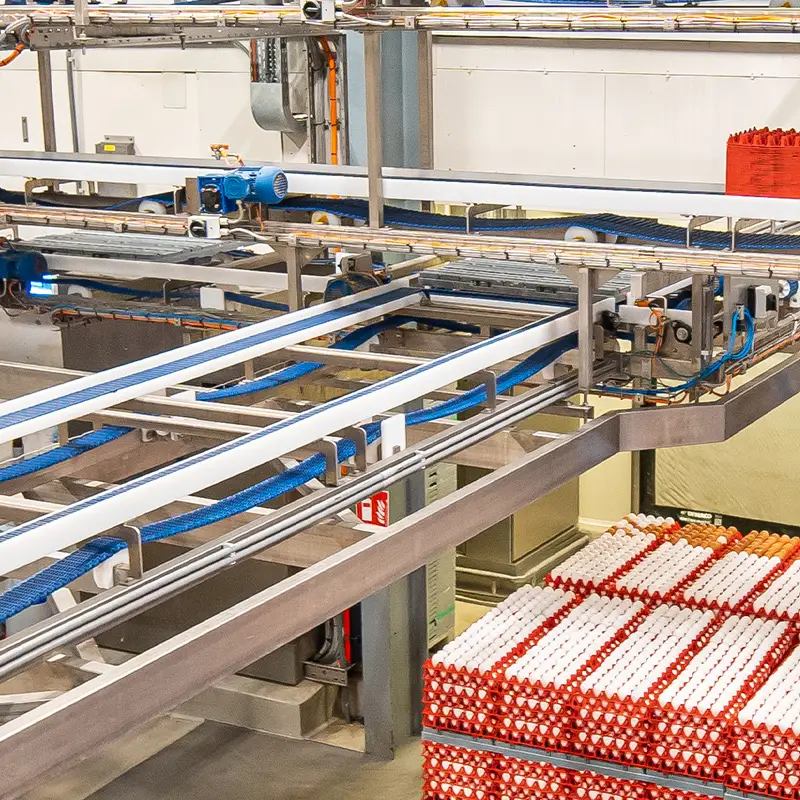
Automated egg grading systems use a combination of mechanical and electronic technologies to streamline the entire sorting process with minimal human intervention. These systems are designed to handle immense volumes efficiently while applying strict quality controls at every stage, from infeed to final grading and packing.
What are the advantages of an automated system?
Implementing an automated system offers a multitude of benefits for egg processing facilities, delivering returns in efficiency, quality, and overall profitability. These systems are a strategic investment that can transform your operations by reducing costs and increasing output, making your business more resilient and competitive.
Mechanical vs. electronic egg grading machines
Choosing between a mechanical and an electronic grader depends heavily on your production volume, budget, and desired level of quality control. Both have their place in the industry, but electronic systems offer far more advanced capabilities for commercial-scale operations looking to maximize precision and data integration.
Mechanical egg graders
Mechanical egg grading machines are a cost-effective solution for smaller farms or entry-level operations. These systems primarily use a system of counterweights and levers to sort eggs by weight. While they are reliable for basic size sorting, they lack the advanced features for internal and external quality inspection found in electronic models and require more manual oversight.
Electronic egg graders
Electronic egg grading machines represent the industry standard for high-volume, precision-focused operations. They use a suite of advanced technologies, including digital scales, acoustic sensors, and AI-powered vision systems, to assess every aspect of the egg. These systems provide unparalleled speed, accuracy, and data-tracking capabilities, making them the superior choice for producers who need to meet stringent quality standards.
Understanding machine capacity: from 5,400 eggs per hour and up
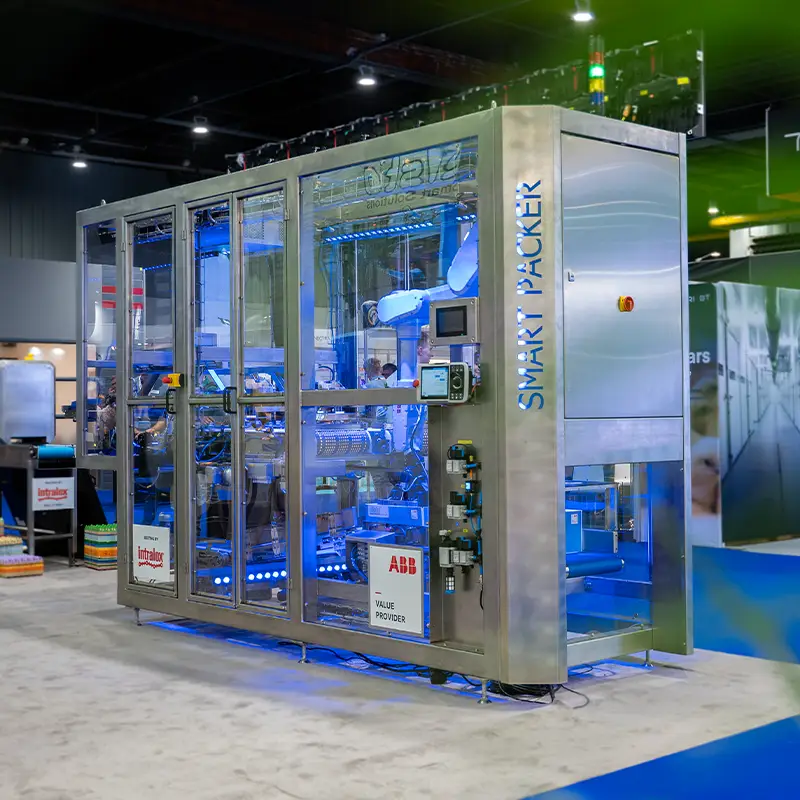
Machine capacity, measured in eggs processed per hour (eph), is a critical factor when selecting a grading system. A small-scale egg sorting and packing machine might handle around 5,400 eph, making it ideal for smaller farms or businesses just starting to automate. These compact units often combine washing, cleaning, sorting, and grading into one efficient footprint.
For large-scale commercial facilities, high-capacity egg grading systems are essential. These advanced industrial lines can process well over 100,000 eggs per hour. The right capacity for your operation depends on your current flock size and future growth plans. Elsto Smart Solutions helps you analyse your needs to recommend a solution that provides both immediate efficiency and long-term scalability.
Why choose Elsto Smart Solutions for your automated egg grading system?
Choosing the right partner for your automation needs is critical for success. Elsto Smart Solutions is a leader in providing innovative and reliable egg grading systems, built on decades of engineering expertise. We deliver fully customized solutions that are designed to solve the unique challenges of your production environment.
Our approach is different. We don’t offer one-size-fits-all machines; we engineer a solution that fits you.
With Elsto Smart Solutions, you’re not just buying a machine; you’re investing in a robust, future-proof solution from a partner dedicated to your growth.
Integrating egg grading with related processing lines
A grading system performs best when it’s seamlessly integrated into your entire production workflow. Proper integration with upstream and downstream processes, such as washing, breaking, and packing, ensures a smooth, efficient, and hygienic operation from start to finish. Careful planning is key to unlocking the full potential of your investment.
Planning your integrated production line
Before installation, it’s vital to map out your entire process flow. Consider your facility’s layout, available space, and how eggs will move from the henhouse to the final package. Working with the experts at Elsto Smart Solutions ensures your new system is configured for optimal flow, minimizing bottlenecks and maximizing throughput. Our expertise extends to solutions such as a lift system for an egg breaking facility to further enhance your processing line.
Maintenance and calibration for optimal performance
To ensure long-term accuracy and reliability, your automated system requires regular maintenance and calibration. This includes routine cleaning of sensors and mechanical parts, software updates, and periodic calibration of weighing and crack detection systems. A proactive maintenance schedule prevents costly downtime and guarantees your system continues to perform at its peak.
Frequently asked questions about egg grading
Here are answers to some common questions about the egg grading process.
What are the grades of eggs?
In many regions, eggs are sorted into three primary consumer grades: Grade AA, Grade A, and Grade B. Grade AA eggs are the highest quality, with firm whites, high yolks, and a small air cell. Grade A eggs are very similar but with slightly less firm whites. Grade B eggs have thinner whites and may have minor shell stains or abnormalities; they are often used for liquid egg products or in baking.
How do automated systems detect cracks in eggs?
Automated systems use highly sensitive technology to find cracks. Acoustic detection involves gently tapping the egg and analysing the resulting sound; a cracked egg produces a distinct acoustic signature. Vision systems use high-resolution cameras and AI to identify hairline fractures that are completely invisible to the naked eye.
Get a free consultation for your egg grading solution
Are you ready to improve your efficiency, enhance product quality, and boost your profitability? The team at Elsto Smart Solutions is here to help. We offer a no-obligation consultation to discuss your specific needs and explore how a custom-engineered automation solution can benefit your business.
Contact us today to speak with one of our automation experts and take the first step toward a smarter, more efficient production line. Stay informed about the latest developments and insights in the industry by checking our news section.
Modernise your poultry operations
Automated egg grading systems are an indispensable asset for any modern poultry operation. They deliver unmatched efficiency, accuracy, and consistency, enabling you to meet market demands while improving food safety and profitability. By leveraging advanced technologies like AI and sensor-based analysis, these systems ensure only the best products reach your customers. Partnering with an expert provider like Elsto Smart Solutions guarantees you receive a tailored, high-performance solution designed for long-term success in the competitive egg industry.
Related posts