Lifting standards and ergonomics in egg tray stacking
Manual handling and stacking of egg trays frequently leads to severe physical strain in industrial processing environments. Across packing stations, egg breaking plants, and hatcheries, operators lift thousands of kilograms of eggs each day at awkward working heights. Without deliberate mechanisation, this repetitive work quickly exceeds statutory occupational health and safety standards and drives up long-term sick leave.
Quick summary
- A full egg tray holding thirty eggs weighs around 2 kilograms, which means stacks of four to six trays quickly reach 8 to 12 kilograms.
- Manual destacking from floor level or stacking above shoulder height exceeds the safe limits defined by the NIOSH lifting equation.
- Elsto Smart Solutions develops custom lifting, stacking, and conveyor systems to systematically eliminate physical overexertion during tray handling.
What kind of information do you find in this article:
Why stacking egg trays poses an ergonomic risk
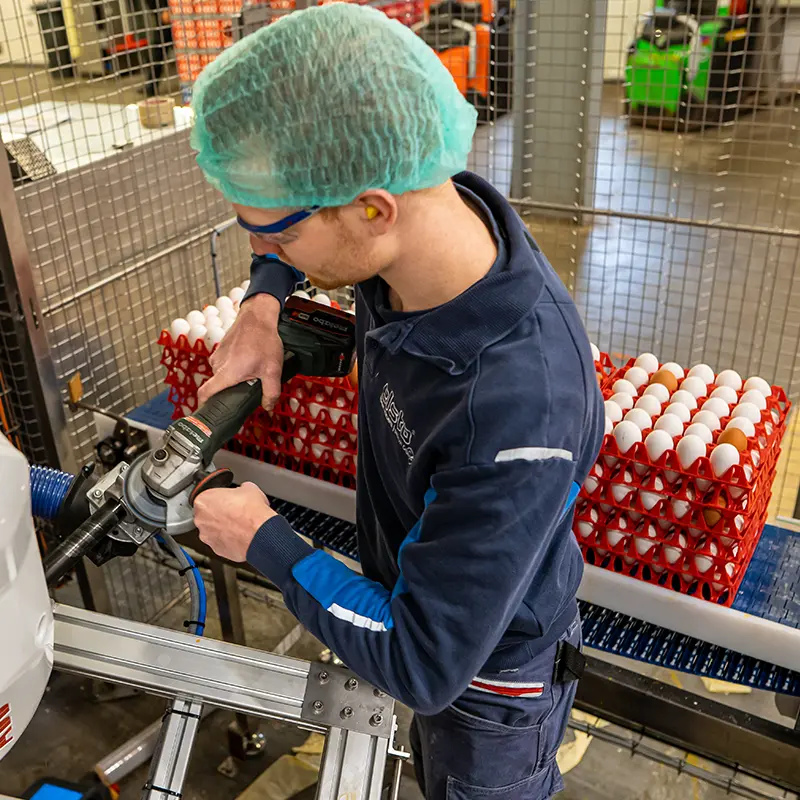
Manual egg tray handling might seem light at first glance, but cumulative repetition makes it physically demanding. A single tray with thirty eggs weighs roughly 2 kilograms on average. In industrial settings, operators rarely lift one tray at a time; they almost always pick up stacks of four to six trays at once. That raises the lifting weight per cycle directly to 8 to 12 kilograms.
When destacking pallets or loading roll containers, these actions occur between floor level and shoulder height. In practice, operators lift with good posture at the start of a shift, but fatigue causes form to deteriorate over time. Bending the spine while twisting the torso introduces severe peak loads on spinal discs.
In industrial egg processing facilities, such as egg grading and egg breaking plants, lines run continuously. An operator moving several stacks per minute easily lifts thousands of kilograms during a single shift. This constant repetition without adequate recovery time strains muscles and tendons. Repetitive strain injury (RSI) and chronic lower back pain are therefore frequent causes of staff absence in these processing rooms.

Which occupational health standards and lifting guidelines apply in practice?
Occupational health and safety regulations require employers to tackle physical strain in the workplace at the source wherever possible. To evaluate egg tray lifting objectively, safety specialists and ergonomists use the internationally recognised NIOSH method (National Institute for Occupational Safety and Health).
Under ideal conditions, this formula sets a theoretical maximum load of 23 kilograms. As soon as adverse variables appear, such as extended reach, asymmetrical lifting, or high cycle frequencies, the allowable weight drops sharply. In an ergonomic evaluation, the lifting movement receives a score or rating based on prevailing conditions. Within a neutral working zone between hip and elbow height, handling qualifies as ergonomically safe (often marked visually with colour coding like light green).
However, when operators must bend down to pallet level or stack above shoulder height, the movement falls well outside this safe zone. Key reach parameters dictate the physical strain:
Because an 8-to-12-kilogram tray stack exceeds these dynamic thresholds, manual packing and destacking stations operate almost continuously in a high-risk ergonomic zone.
How manual tray handling compares to automated systems
The difference between manual handling and mechanical egg tray automation goes beyond eliminating physical effort; it centres on process stability and consistent product safety. While human movements vary with fatigue, automated machinery operates within tightly programmed tolerances.
The comparison below outlines the primary operational differences between both methods:
| Feature | Manual tray handling | Automated system |
|---|---|---|
| Physical strain | High risk of back and shoulder injuries | Completely eliminated for the operator |
| Health and safety compliance | Frequently exceeds NIOSH standards | Consistently meets health and safety rules |
| Speed consistency | Fluctuates due to fatigue and breaks | Constant and adjustable to line speeds |
| Egg breakage risk | Higher risk of cracked shells when tired | Controlled clamping and placement forces |
| Staff deployment | High reliance on manual labour | Minimal; staff manage the process |
Opting for mechanical support shifts the worker’s role from heavy physical labourer to process operator. This not only improves safety on the shop floor, but also makes the role within the production plant more accessible and attractive to a broader pool of workers.
Mechanical solutions that relieve operators during stacking
To minimise physical strain during egg tray processing, several technical options exist, ranging from modular lifting equipment to full robotics. Depending on available floor space and line layout, plants can introduce targeted mechanical interventions.
Lifting and elevating units
Custom-built lifting units ensure an egg tray or tray stack is always presented at an ergonomic working height. This stops operators from squatting deeply or reaching above shoulder height. This type of mechanisation is widely used at the infeed of breaking lines and grading machines, where steady product feed is required.
Automatic stacking and destacking systems
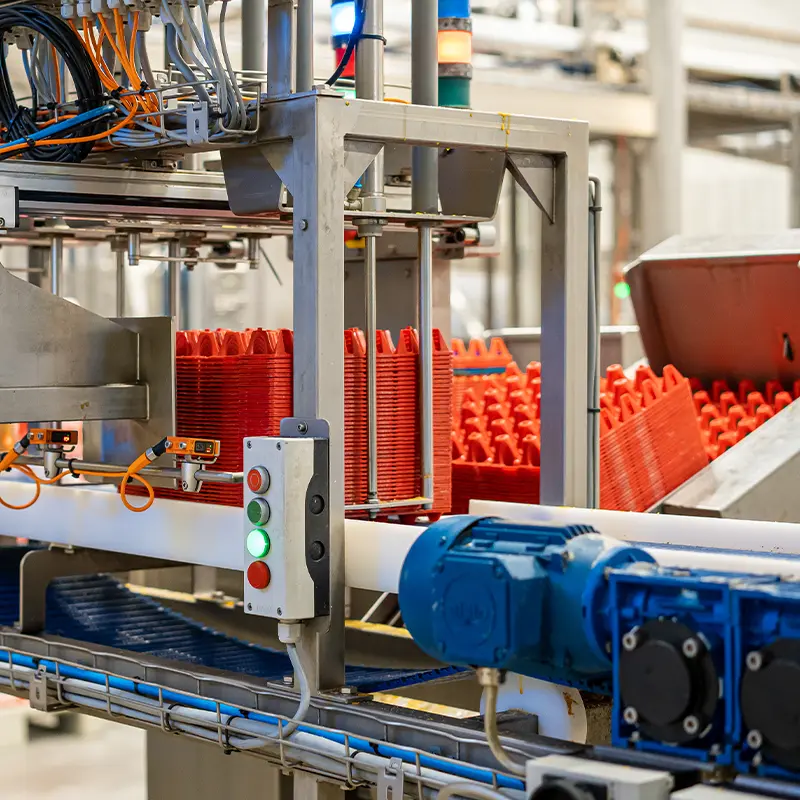
Stacking and destacking systems take over repetitive lifting entirely. Instead of stacking crates or trays by hand, the system uses mechanical guides to nest or stack trays until the target height is reached. Hatcheries use similar setups; for instance, an automated setter tray destacker in a dedicated hatchery installation processes up to 250 crates per hour without manual intervention.
Conveyor belts and roller tracks
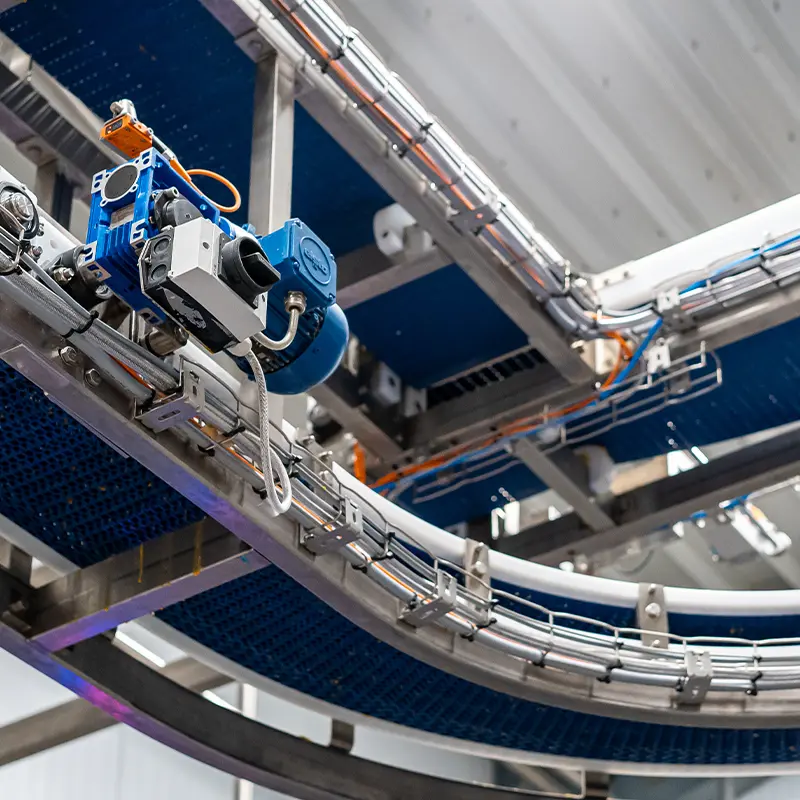
Automated conveyor systems link different processing stations together smoothly. Instead of operators manually pushing stacks of egg trays on roll containers or pallets across the floor, powered conveyors move the trays in a controlled manner to the next production step. This cuts transit times and removes unnecessary lifts between production zones.
Robotics and cobot integration
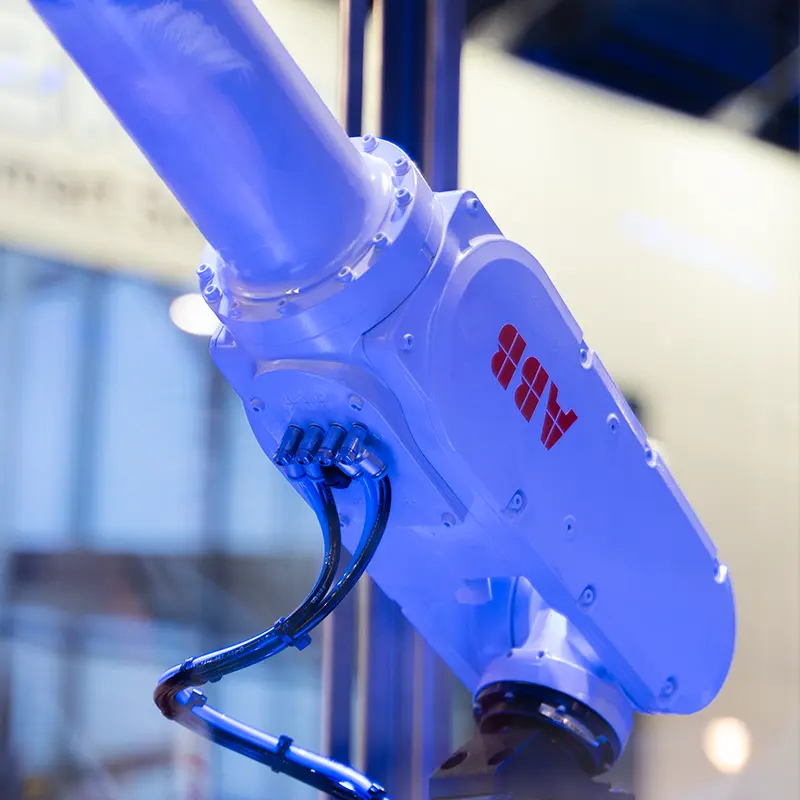
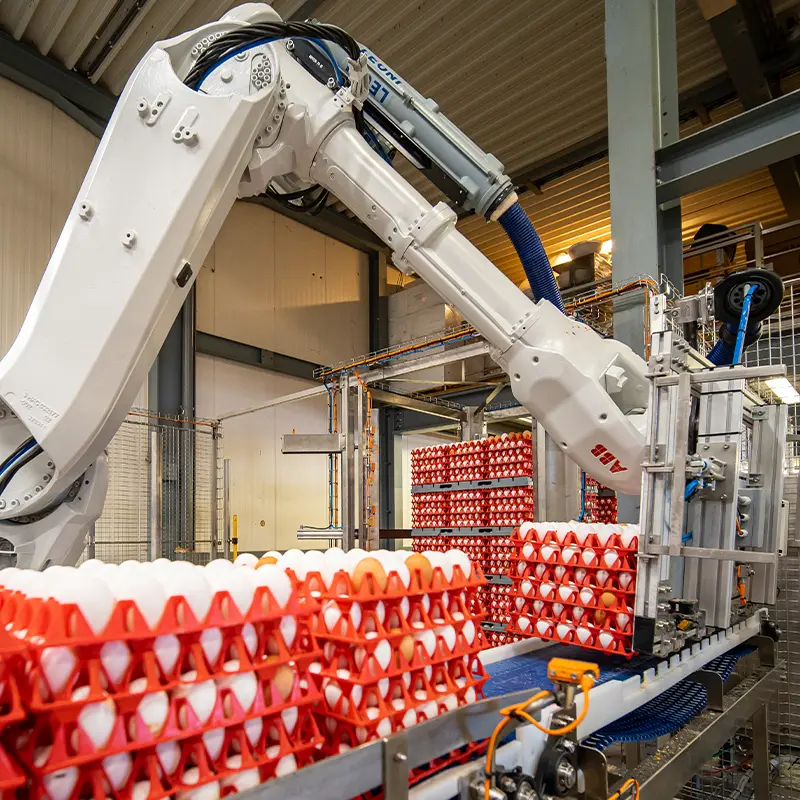
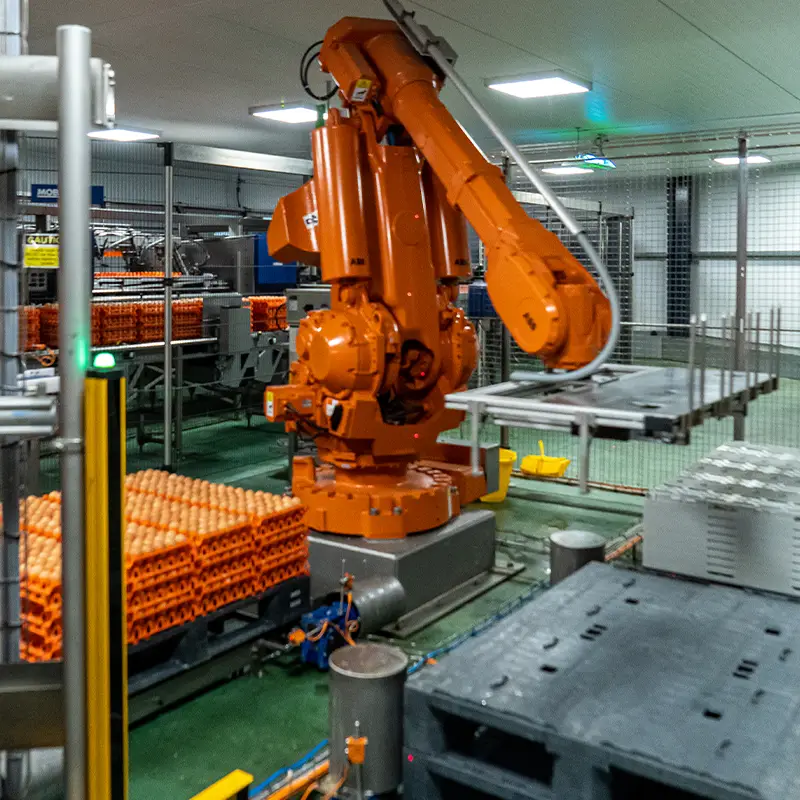
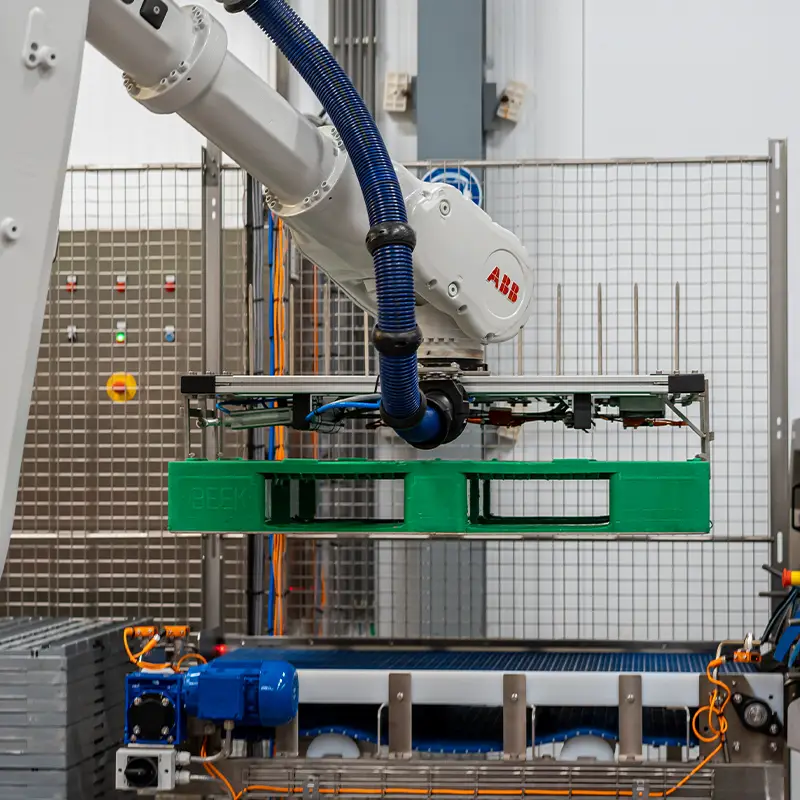
For complex movements like simultaneous lifting, rotating, and palletising, industrial robotic arms and cobots offer practical answers. Equipped with specialised grippers, robots handle delicate egg trays accurately without cracking shells. For more detail on applying this technology, read our guide on which robotic solutions support consistent egg processing.
Who benefits from egg tray handling automation?
Investing in ergonomic handling and stacking for egg trays provides clear returns across diverse industrial production and handling facilities. The demand usually arises where strict occupational health rules, labour shortages, and cost-control targets converge.
Primary settings include egg grading and packing stations where operators handle thousands of trays daily and struggle to keep pace with high-speed packaging machinery. In addition, industrial egg breaking facilities use automation to feed large incoming volumes continuously into the breaking line without disruption. In hatcheries, automated systems remove physical strain around setter trays and crates while upholding strict hygiene standards. Facilities coping with high absenteeism from back and shoulder injuries also turn to automation to satisfy workplace safety inspections. Finally, operations wanting to expand output within their current footprint without recruiting extra manual staff find automation particularly valuable.
How Elsto Smart Solutions helps you automate tray handling
Elsto Smart Solutions designs and builds custom automation systems that remove heavy, repetitive physical work. We do not supply generic off-the-shelf machinery; we develop modular, process-specific solutions engineered around your exact floor layout.
Our strength lies in bringing engineering, mechanical design, robotics, and system integration under one roof. When automating tray handling, we follow a structured approach:
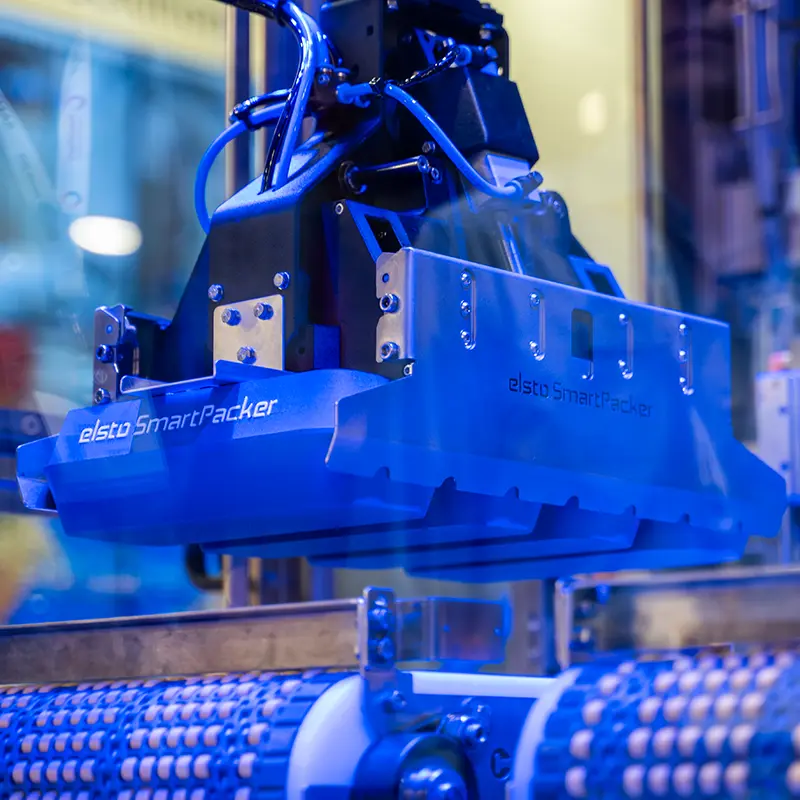
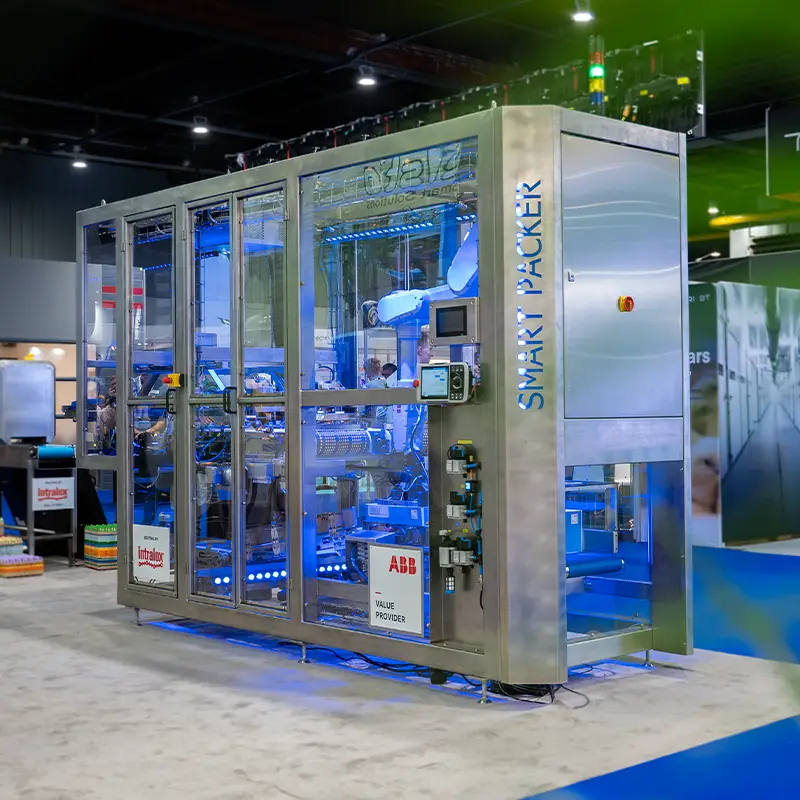
Drawing on our experience with projects like lift and conveyor systems for an egg breaking facility, the Smartpacker, and robotic integration on egg grading lines, we understand how to handle delicate food products reliably. To see how automation addresses labour shortages more broadly, read how robotics solves the labour shortage in the poultry sector.
Frequently asked questions about egg trays and handling
What exactly is an egg tray?
An egg tray is a moulded pulp or plastic container designed to hold eggs securely and protect them during internal transport, storage, and industrial processing. In commercial processing, a standard tray typically holds thirty eggs, allowing stable stacking on pallets or within containers.
How much does a full egg tray of thirty eggs weigh?
A full egg tray weighs between 1.9 and 2.2 kilograms on average, depending on egg size grading and tray construction material. In manual handling, operators routinely move stacks of four to six trays at a time, bringing the lifted weight to between 8 and more than 12 kilograms.
Why does destacking egg trays often violate health and safety standards?
Destacking egg trays causes physical strain because operators repeatedly reach down to floor-level pallets or stretch above shoulder height. Combining heavy stack weights, high repetition rates, and awkward trunk rotation quickly breaches the safety limits set by the NIOSH lifting formula.
Permanently eliminating physical strain in egg tray handling
Complying with occupational lifting standards in egg tray handling is not just a regulatory hurdle; it is a practical requirement for a healthy, profitable operation. Manual stacking and lifting introduce constant risks to operator health and limit line throughput.
Transferring repetitive tasks to mechanical lifting systems, destackers, or advanced robotics stabilizes line operations. Workers avoid physical wear, egg breakage from fatigue drops, and facility output becomes predictable. Curious how a custom setup can support your processing line? Read our perspective on industrial automation for production companies or contact Elsto Smart Solutions to discuss the right approach for your facility.
Related posts